Across rapidly expanding industrial and urban ecosystems, diesel generator (DG) sets remain the unsung heroes of uninterrupted power. From healthcare campuses and hyperscale data centers to manufacturing hubs and massive infrastructure projects, DG sets quietly step in when grid reliability falters—no drama, no delays.
But here’s the flip side. While the lights stay on, unmanaged exhaust emissions slowly seep into the air we breathe. Particulate matter (PM), nitrogen oxides (NOx), hydrocarbons (HC), and carbon monoxide (CO) don’t magically disappear. They hang around, build up, and—let’s be honest—become a serious public health and regulatory concern.
That’s exactly where RECD for Diesel Generators: Measurable Impact on Air Pollution Control and Sustainable Power Continuity changes the game. Retrofit Emission Control Devices (RECDs) aren’t experimental add-ons or temporary fixes. They’re proven, scalable, and compliance-ready solutions that allow industries to maintain power continuity without ignoring environmental responsibility.
Bottom line? You no longer have to choose between reliable power and clean air—and that’s a big shift.
Industrial Power Continuity Under Environmental Accountability
Let’s face it—energy resilience and environmental stewardship can’t sit in separate silos anymore. Regulators expect both. Communities demand both. Even investors are paying attention.
DG sets operate by combusting diesel at high temperatures and pressures. It’s efficient for backup power, sure—but the exhaust tells another story. A typical DG exhaust stream contains:
- Fine and ultrafine particulate matter (PM)
- Nitrogen oxides (NOx)
- Unburnt hydrocarbons (HC)
- Carbon monoxide (CO)
Without mitigation, these pollutants don’t disperse harmlessly. They concentrate around industrial campuses, hospital zones, residential clusters, and construction corridors—degrading ambient air quality and increasing health risks.
RECD for Diesel Generators: Measurable Impact on Air Pollution Control and Sustainable Power Continuity reframes the challenge. Instead of letting exhaust escape unchecked, RECDs convert the DG exhaust pathway into a controlled, monitored, and treated system. The result? Compliance-ready power continuity that aligns neatly with modern sustainability expectations.
What Is a Retrofit Emission Control Device (RECD)?
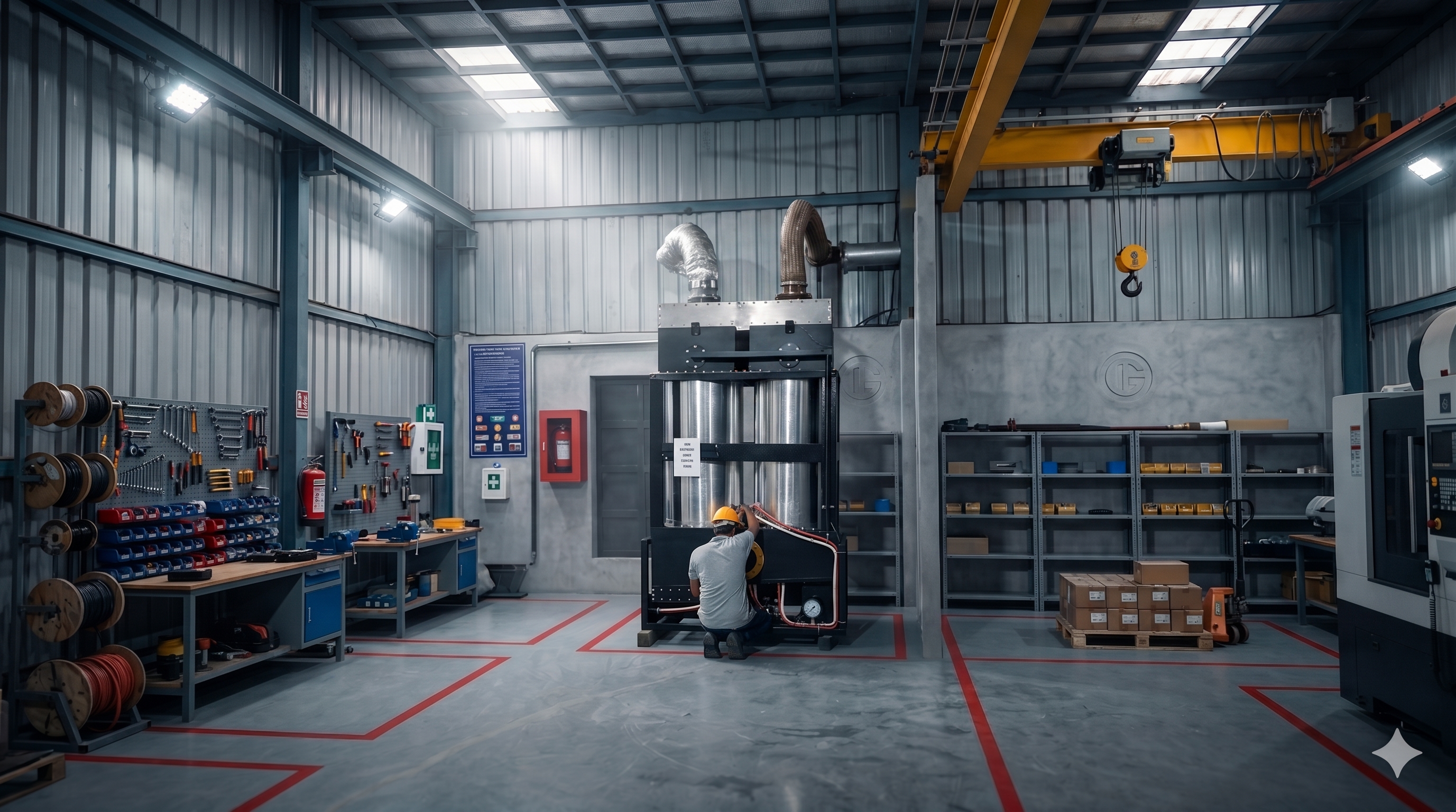
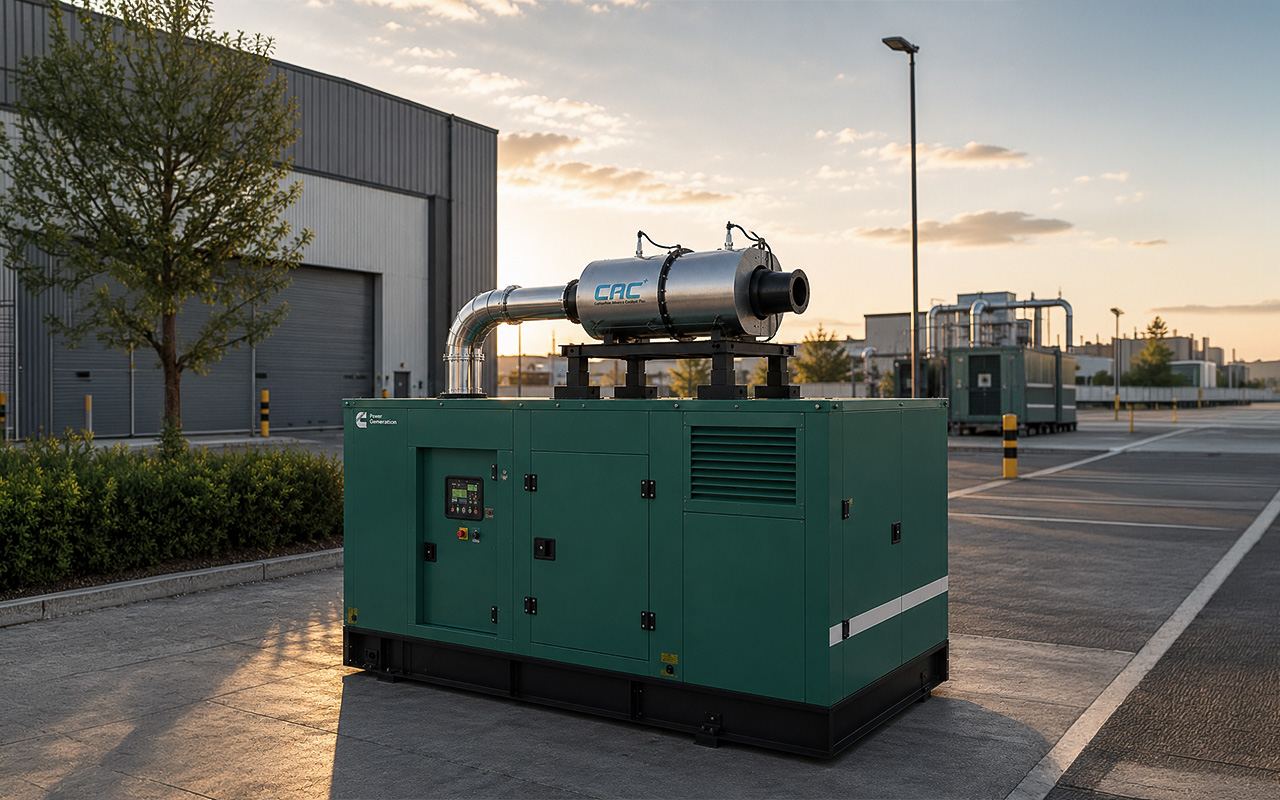
A Retrofit Emission Control Device (RECD) is an engineered emission control assembly installed directly into the exhaust line of an existing diesel generator. And yes—it’s designed specifically for retrofit applications.
That means:
- No engine replacement
- No major civil modifications
- No downtime-heavy shutdowns
Whether you’re running an older DG set or a newer installation, an RECD enables compliance with stringent emission benchmarks while keeping operations smooth and uninterrupted.
Core Capabilities at a Glance
- Ultra-high-efficiency particulate control
- Catalytic oxidation of harmful exhaust gases
- Regeneration or filterless self-maintenance mechanisms
- Real-time diagnostics for continuous compliance assurance
By converting raw exhaust into treated output, RECDs consistently reduce PM and toxic gases—while keeping generator performance exactly where it belongs.
Why RECDs Are Central to Air Pollution Control Strategies
Ultra-High Reduction in Particulate Matter (PM)
Here’s the statistic that really grabs attention: PM reduction levels reaching up to 99.9%.
Fine particulates are among the most dangerous components of diesel exhaust. They penetrate deep into the lungs, enter the bloodstream, and contribute to long-term respiratory and cardiovascular diseases. Capturing them at the source isn’t just smart—it’s essential.
Targeted Control of Nitrogen Oxides (NOx)
NOx emissions are major contributors to smog and secondary pollutants. Advanced catalyst formulations within modern RECDs actively reduce NOx concentrations, helping curb urban air quality degradation before it spirals.
Regulatory Alignment Without Operational Disruption
Emission control for medium- and high-capacity DG sets is no longer optional. RECD adoption aligns operations with directives issued by the Central Pollution Control Board, ensuring uninterrupted power generation without compliance anxiety.
ESG and Sustainability Performance
RECD deployment directly strengthens Environmental, Social, and Governance (ESG) metrics. Organizations gain measurable, auditable emission reductions—ideal for sustainability reports, stakeholder disclosures, and competitive procurement processes.
ARAI Type Approval and the Shift Toward High-Capacity Compliance
Beyond CPCB norms, ARAI Type Approval has emerged as a critical benchmark—especially for medium- and large-capacity diesel generators where exhaust volumes and thermal loads increase dramatically.
In this space, Novorbis has achieved ARAI Type Approval for its complete RECD portfolio ranging from 100 kW up to 771 kW, including the 771 kW category approved on 19th December.
This milestone isn’t just a certificate—it validates:
- Emission performance at high power ratings
- Thermal safety under sustained loads
- Engine compatibility where conventional systems often struggle
It signals a clear industry shift: emission control systems must now scale upward—not just in theory, but in certified, real-world operation.
CarbonFree™: Compact, Filterless, and Built for Large DG Sets
What truly sets this evolution apart is CarbonFree™—recognized as the world’s most compact, filterless RECD designed specifically for large DG sets in the 750 kVA and 910 kVA range.
By eliminating traditional filtration bottlenecks, CarbonFree™ avoids clogging entirely, minimizes maintenance, and maintains near-zero exhaust backpressure, even under continuous high-load operation. No choking. No performance penalties.
Key Advantages of CarbonFree™ Technology
- ARAI-certified coverage from 100 kW to 771 kW
- Filterless design—no clogging, no regeneration downtime
- Ultra-compact form factor for space-constrained sites
- Minimal exhaust backpressure, even at peak load
- Class 1 RECD classification (no secondary pollutants)
- No silencer removal or additional support structures
- Stainless-steel construction for long-term durability
This isn’t incremental improvement—it’s a complete rethink of how RECDs should perform at industrial scale.
How RECD Technology Works Inside a DG Exhaust System
RECDs may look compact on the outside, but internally, there’s serious engineering at work:
- Exhaust Capture – Hot exhaust gases are routed directly into the RECD housing after the DG exhaust outlet.
- Emission Treatment – Particulate capture or catalytic oxidation neutralizes PM, CO, HC, and NOx.
- Thermal Stability – Systems are engineered to withstand high exhaust temperatures without degradation.
- Intelligent Monitoring – AI-enabled On-Board Diagnostic (OBD) panels track temperature profiles, pressure differentials, and system health in real time.
Predictive maintenance alerts and transparent dashboards turn emission control into an actively managed process—not a black box bolted onto the exhaust.
Measurable Benefits of Installing RECDs on Diesel Generators
Let’s skip the hype and stick to facts:
- Significant reduction in PM, NOx, HC, and CO emissions
- Noticeable improvement in workplace and neighborhood air quality
- Full compliance with CPCB and ARAI norms for applicable DG capacities
- Extended engine life due to reduced carbon accumulation
- Enhanced corporate reputation as an environmentally responsible operator
- Stronger ESG positioning and tender eligibility
Simply put, RECD for Diesel Generators: Measurable Impact on Air Pollution Control and Sustainable Power Continuity delivers value far beyond regulatory checklists.
Industries Where RECD Adoption Is Essential
What once felt “optional” has become operationally critical across sectors dependent on standby power:
- Manufacturing and heavy industrial plants
- IT parks and hyperscale data centers
- Hospitals and medical campuses
- Universities and large educational institutions
- Government facilities and public infrastructure
- Construction, real estate, and large project sites
Each of these environments benefits from immediate emission reductions—without compromising reliability.
Scalable Deployment Across DG Capacities
One size doesn’t fit all—and RECD technology gets that.
Modern systems support DG sets from 125 kVA to 1500 kVA and beyond. Modular designs allow capacity-specific optimization while maintaining uniform compliance standards across multi-generator installations.
Running a campus with multiple DGs? No problem—RECDs scale cleanly and consistently.
Performance Visibility Through Digital Diagnostics
This is where things get interesting.
Integrated OBD systems provide:
- Live emission control performance indicators
- Pressure and temperature analytics at critical points
- Automated alerts for maintenance or anomalies
- Historical data logs for audits and inspections
Suddenly, emission control isn’t static hardware—it’s a living, data-driven system.
Strategic Value Beyond Compliance
Here’s the bigger picture. RECDs don’t just tick regulatory boxes—they future-proof diesel-based backup infrastructure.
As emission norms tighten and accountability rises, organizations equipped with RECD for Diesel Generators: Measurable Impact on Air Pollution Control and Sustainable Power Continuity gain a decisive edge. They retain continuity, maintain credibility, and demonstrate leadership—all through one integrated solution.
Frequently Asked Questions (FAQs)
What exactly does an RECD do?
It captures particulate matter and treats gaseous emissions from DG exhaust, drastically reducing harmful pollutants before release.
Will installing an RECD affect generator performance?
No. Advanced and filterless RECD designs maintain minimal exhaust backpressure and preserve original performance envelopes.
Is RECD installation mandatory?
For many medium- and high-capacity DG sets, emission control is mandatory under CPCB guidelines.
Can RECDs be installed on older DG sets?
Absolutely—that’s the essence of retrofit compatibility.
How is performance monitored?
Through integrated OBD systems offering real-time diagnostics, alerts, and compliance data.
Conclusion: Clean Power Continuity at Industrial Scale
As industrial density rises and urban energy demand surges, controlling diesel generator emissions is no longer optional—it’s expected.
RECD for Diesel Generators: Measurable Impact on Air Pollution Control and Sustainable Power Continuity proves that reliability and responsibility can coexist. Through advanced engineering, ARAI-certified performance, filterless innovation like CarbonFree™, intelligent diagnostics, and scalable deployment, RECDs deliver cleaner air without compromising power resilience.
We don’t see RECD adoption as a burden. Honestly? It’s an opportunity—to operate smarter, protect public health, and align critical power infrastructure with the environmental realities of modern industry. And that’s a win worth investing in.