
Let’s be honest—diesel generators aren’t going away anytime soon. From hospitals that can’t afford even a heartbeat of downtime to data centers guarding terabytes of mission-critical information, diesel gensets remain the unsung heroes of uninterrupted power.
Yet, here’s the catch: while they keep the lights on, they also emit pollutants that cities, regulators, and communities can no longer shrug off.
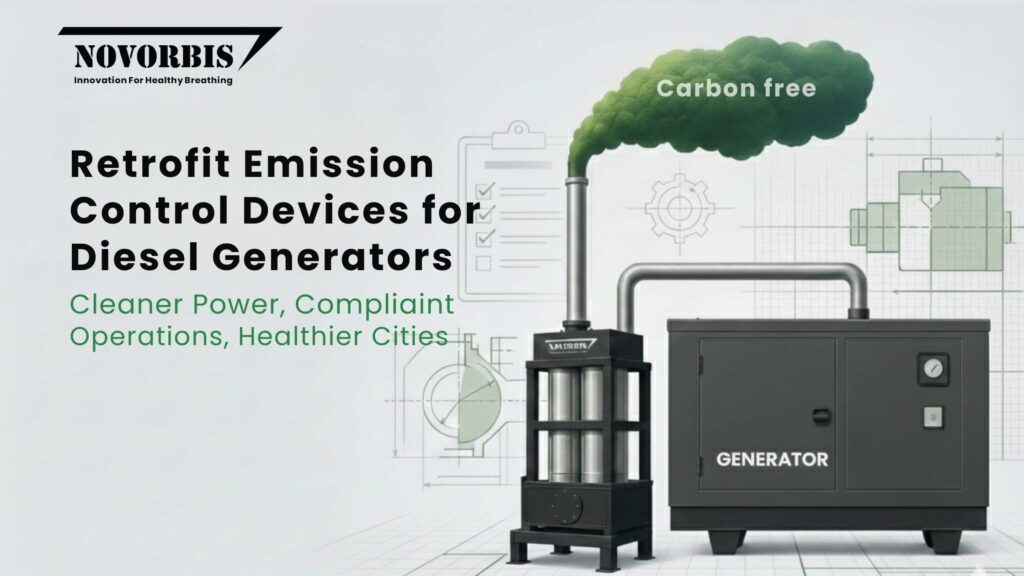
That’s exactly where Retrofit Emission Control Devices for Diesel Generators: Cleaner Power, Compliant Operations, Healthier Cities step into the spotlight. We operate in an era where uninterrupted power and environmental responsibility must advance together—and, thankfully, technology has caught up with ambition. By pairing dependable backup power with advanced exhaust treatment, RECDs deliver deep emission cuts, regulatory alignment, and long-term operational stability.
No drama. No compromise. Just smarter power.
Why Diesel Generators Still Matter (And Why They Must Evolve)
Across industrial campuses, hospitals, IT parks, commercial buildings, and residential complexes, diesel generators remain mission-critical. Grid instability, peak demand, and emergency scenarios make them indispensable. When everything else fails, DG sets don’t blink.
But with rising urban density and tightening air-quality norms, the old “run it and forget it” mindset doesn’t fly anymore. Communities want reliability and responsibility. Regulators want proof, not promises.
So, what’s the fix?
Not replacement. Retrofitting.
Retrofit Emission Control Devices allow existing generator fleets to stay relevant, compliant, and—dare we say it—cleaner, without ripping out perfectly functional assets.
Precision Emission Control Inside the Exhaust Stream
This is where the real work happens—right inside the exhaust line.
Retrofit Emission Control Devices for Diesel Generators: Cleaner Power, Compliant Operations, Healthier Cities rely on in-line integration. RECDs are installed directly into the generator’s exhaust pathway, acting on exhaust gases in real time while the generator operates at full load.
No derating.
No performance dip.
Pretty neat, right?
Key In-Exhaust Actions Explained
🔹 Particulate Capture
Advanced systems trap soot and fine particulate matter (PM) before it escapes into the atmosphere. The black smoke everyone dreads? Reduced to near invisibility.
🔹 NOx Transformation
Catalytic pathways—including urea-assisted SCR systems where applicable—convert nitrogen oxides into harmless nitrogen and water. It’s chemistry doing the heavy lifting, quietly.
🔹 Oxidation Cleanup
Carbon monoxide (CO) and unburned hydrocarbons are oxidized into carbon dioxide and water vapor—far less harmful and far more acceptable.
The result?
Lower smoke, reduced odor, fewer toxic byproducts—and all without compromising uptime. That’s what a real win-win looks like.
Performance Benchmarks That Actually Matter
Let’s not sugarcoat it—numbers matter. Not lab-only claims, but real-world results under actual operating loads.
Well-designed RECD configurations consistently deliver:
- Particulate Matter (PM): up to 80–90% reduction
- Nitrogen Oxides (NOx): up to 70–85% reduction
- Carbon Monoxide & Hydrocarbons: significant oxidation across duty cycles
These aren’t abstract benefits. They translate into cleaner air around facilities, safer workplaces, calmer neighbors, and—let’s be real—far less anxiety during inspections.
ARAI Type Approval and the Shift Toward High-Capacity Compliance
Beyond CPCB approval, a new benchmark has taken center stage—ARAI Type Approval.
For medium- and large-capacity diesel generators, this certification has become a critical differentiator. Why? Because emission control at higher power ratings isn’t easy. Thermal loads rise, exhaust volumes surge, and conventional systems often struggle to keep up.
In this space, Novorbis has reached a notable milestone.
The company has achieved ARAI Type Approval for its complete RECD range—from 100 kW up to 771 kW, including approval of the 771 kW category on 19th December.
This isn’t just a badge. It validates:
- Emission performance under high loads
- Thermal safety at elevated exhaust temperatures
- Engine compatibility where failures are least forgiving
Simply put, it proves that high-capacity compliance can be achieved without compromise.
CarbonFree™: Compact, Filterless, and Built for Large DG Sets
What truly sets this evolution apart is CarbonFree™—recognized as the world’s most compact, filterless RECD, purpose-built for large diesel generators in the 750 kVA and 910 kVA range.
Traditional filtration systems, while effective, often face a familiar enemy: clogging. CarbonFree™ takes a different path altogether.
By eliminating conventional filtration bottlenecks, CarbonFree™ avoids clogging, minimizes maintenance, and maintains near-zero exhaust backpressure, even during continuous high-load operation.
No choking.
No gradual performance loss.
Just steady compliance.
Key Advantages of CarbonFree™
- ARAI-certified coverage from 100 kW to 771 kW
- Filterless design with zero clogging risk
- Ultra-compact form factor—ideal for tight installations
- Minimal exhaust backpressure, even at peak loads
- Class 1 RECD classification (no secondary pollutants)
- No silencer removal or additional support structures
- Stainless-steel construction for long-term durability
This reflects a broader industry shift—emission control systems are no longer judged solely on reductions, but on how effortlessly they integrate into real-world operations.
Regulatory Readiness and Audit Confidence
Compliance isn’t optional anymore—it’s survival.
RECD installations are designed to align with the evolving framework governed by the Central Pollution Control Board (CPCB). But the focus isn’t just hardware—it’s preparedness.
What That Means in Practice
- Clear documentation and traceability
- Testing and inspection readiness
- Alignment with CPCB norms, including CPCB IV+ where applicable
- Proper commissioning and conformity protocols
When auditors arrive, you’re not scrambling. You’re ready. Calm, collected, compliant.
Health-Forward Operations for People and Communities
Let’s pause for a second—because this part matters.
Diesel exhaust isn’t just an environmental issue; it’s a public-health concern. Fine particulates and exhaust compounds are linked to respiratory and cardiovascular stress. Not exactly what you want near hospitals, schools, or residential towers.
By suppressing emissions at the source, Retrofit Emission Control Devices for Diesel Generators: Cleaner Power, Compliant Operations, Healthier Cities help create healthier indoor and outdoor environments for:
- Employees working long shifts
- Patients with compromised immunity
- Residents in dense urban neighborhoods
- Visitors who expect clean, breathable air
Cleaner exhaust means fewer headaches—literally and figuratively.
Economic Sense Across the Asset Lifecycle
Now, let’s talk money—because sustainability must make financial sense.
RECD programs are engineered with total cost of ownership in mind, and—surprise—they often save more than they cost.
Lifecycle Benefits Include
- Extended engine life through optimized exhaust backpressure
- Lower maintenance exposure from reduced soot deposition
- Operational continuity without derating or fuel penalties
- Predictable service intervals supported by robust after-sales programs
Yes, there’s an upfront investment. But it’s offset by compliance assurance, operational stability, and reputational gains that quietly compound over time.
Sector-Ready Deployments at Scale
One size doesn’t fit all—and that’s perfectly fine.
RECD rollouts are tailored for sectors that depend on reliable backup power:
- Manufacturing plants and industrial estates
- Hospitals and healthcare campuses
- IT parks and corporate offices
- Residential high-rises and gated communities
- Data centers and mission-critical facilities
- Universities and large educational institutions
Each deployment is sized to generator capacity, duty cycle, and site constraints—ensuring consistent results across entire portfolios, not just isolated wins.
Selection Criteria That Deliver Durable Results
Choosing the right RECD isn’t about glossy brochures or buzzwords. It’s about disciplined evaluation.
What to Look For
- Accreditation aligned with current CPCB and ARAI norms
- Proper capacity matching to DG kVA and exhaust characteristics
- Verified emission-reduction data under comparable operating loads
- Serviceability with clear maintenance access
- Strong warranties and long-term manufacturer support
Cutting corners here? Bad idea. A thoughtful selection process protects capital assets, simplifies audits, and ensures reliability year after year.
System Flow at a Glance
Diesel Generator → Exhaust Outlet → Emission Control Module → Catalytic Treatment → Cleaner Exhaust Release
Simple flow. Serious impact.
Operational Best Practices for Sustained Performance
Hardware alone doesn’t guarantee success—operations do.
Best Practices That Keep Systems Sharp
- Scheduled inspections aligned with runtime hours
- Differential pressure monitoring (where applicable)
- Catalyst health checks and reagent management
- Detailed record-keeping for compliance and performance audits
Stick to this playbook, and reduction efficiency doesn’t fade—it lasts.
Frequently Asked Questions (FAQs)
Do RECDs affect generator performance or fuel efficiency?
Not at all. Properly designed systems preserve generator output without derating or fuel penalties.
Are RECDs mandatory everywhere?
Requirements vary, but regulatory pressure is increasing—especially in urban, industrial, and high-capacity installations.
Can older generators be retrofitted?
Absolutely. RECDs are designed to upgrade existing generator fleets, not replace them.
How often do RECDs need maintenance?
Maintenance depends on runtime and load, but modern designs—especially filterless systems—keep schedules predictable.
A Practical Path to Cleaner Backup Power
Here’s the bottom line: dependable power doesn’t have to come at the environment’s expense.
Retrofit Emission Control Devices for Diesel Generators: Cleaner Power, Compliant Operations, Healthier Cities deliver a simple, effective standard—lower emissions, regulatory confidence, and uninterrupted operations. Quietly. Efficiently. At scale.
By integrating proven exhaust control into existing generator fleets, organizations move decisively toward cleaner cities and responsible growth—without sacrificing reliability.
And honestly? That’s the kind of progress worth backing.