
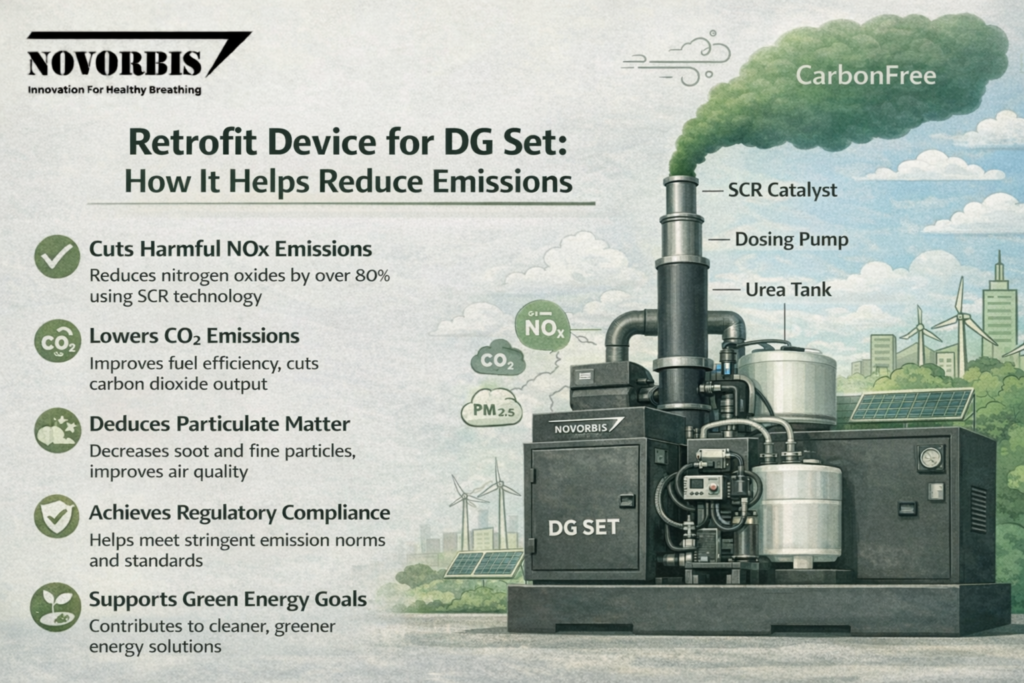
Diesel Generator (DG) sets are widely used across industries, hospitals, commercial buildings, and residential societies. While DG sets provide reliable power backup, they also release harmful emissions that contribute to air pollution.
To control this pollution without replacing existing generators, a Retrofit Device for DG Set is used. This article explains what a retrofit device is and how it helps reduce emissions in simple and practical terms.
What Is a Retrofit Device for DG Set?
A Retrofit Device for DG Set is an emission control system added to an existing diesel generator to reduce harmful exhaust pollutants.
The most common retrofit device used in India is the Retrofit Emission Control Device (RECD), which is installed on the DG set’s exhaust system to meet pollution norms prescribed by the Central Pollution Control Board (CPCB).
In sim Zple words: A retrofit device cleans the smoke from an old DG set and makes it pollution-compliant.
Why Are Retrofit Devices Needed for DG Sets?
Older DG sets were manufactured before today’s strict emission norms. As a result, they emit:
- Black smoke
- Particulate Matter (PM)
- Nitrogen Oxides (NOx)
- Carbon Monoxide (CO)
Retrofit devices are needed to:
- Reduce air pollution
- Protect public health
- Comply with CPCB and State Pollution Control Board rules
- Avoid fines or DG set shutdown
How a Retrofit Device Helps Reduce Emissions
A retrofit device reduces emissions through the following process:
1. Exhaust Gas Treatment
When the DG set runs, exhaust gases pass through the retrofit device instead of directly entering the air.
2. Particle & Gas Reduction
- Harmful particulate matter is trapped or oxidized
- Toxic gases are chemically converted into less harmful substances
3. Cleaner Exhaust Output
The exhaust released after treatment contains:
- Much less smoke
- Lower particulate matter
- Reduced toxic gases
This results in significantly cleaner emissions from the same DG set.
Types of Retrofit Devices Used for DG Sets
1. Filter-Based Retrofit Device
- Uses filters to trap soot and smoke
- Requires periodic cleaning
2. Filterless Retrofit Device
- Uses advanced oxidation or catalytic technology
- Low maintenance
- Longer life
3. Catalytic Retrofit Device
- Converts CO and hydrocarbons into safer gases
- Often combined with other systems
Benefits of Using a Retrofit Device for DG Set
Installing a retrofit device offers multiple benefits:
- Reduces harmful emissions and black smoke
- Improves local air quality
- Helps comply with CPCB emission norms
- Avoids fines, notices, and DG set sealing
- Extends usable life of existing DG sets
- No need to buy a new generator
Is a Retrofit Device Mandatory for DG Sets?
Yes. In many parts of India, existing and older DG sets are required to install retrofit emission control devices to comply with pollution regulations. Authorities may take strict action against non-compliant DG sets.
Installing a certified retrofit device ensures legal, smooth, and uninterrupted DG operation.
Cost of Retrofit Device for DG Set (Indicative)
The cost depends on:
- DG set capacity (kVA)
- Technology used (filter or filterless)
- Certification level
- Installation complexity
💰 Indicative Price Range:
- Small DG sets: ₹1.5 – ₹2.5 lakh
- Medium DG sets: ₹3 – ₹6 lakh
- Large DG sets: ₹7 – ₹10 lakh or more
Conclusion
A Retrofit Device for DG Set is an effective and practical solution to reduce emissions from existing diesel generators. By treating exhaust gases before release, it significantly cuts down pollution, ensures compliance with environmental norms, and allows DG sets to continue operating legally.
For DG owners, retrofit devices are not just a regulatory requirement—they are a smart and responsible step toward cleaner air.