
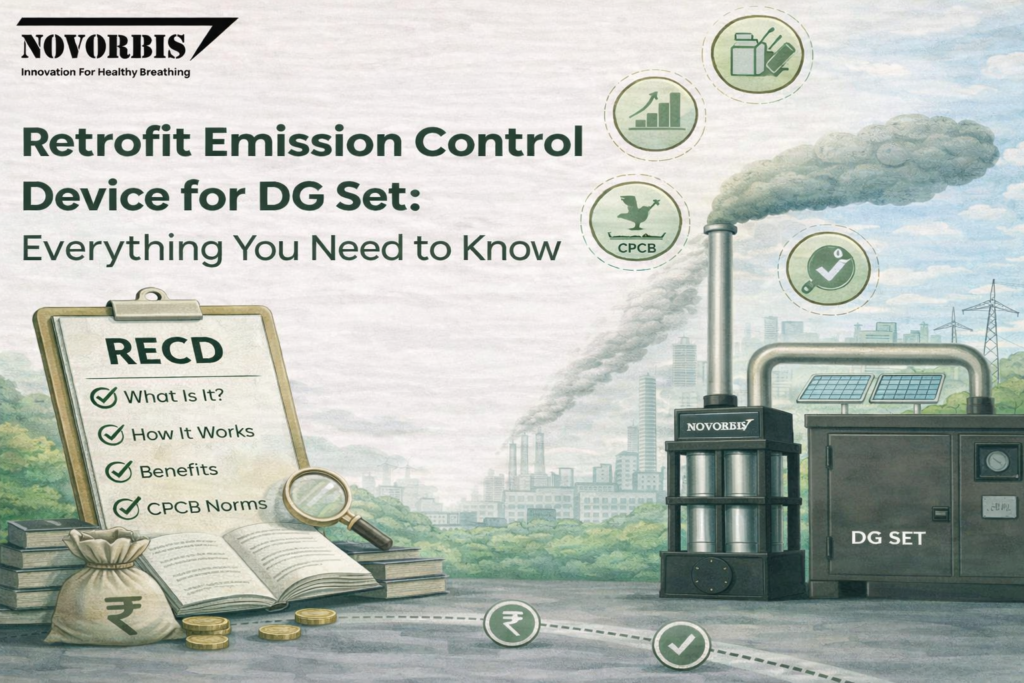
Diesel Generator (DG) sets are essential for backup power across industries, hospitals, commercial buildings, and residential complexes. However, DG sets are also a major source of air pollution. To address this, Retrofit Emission Control Devices (RECDs) have become a critical solution—especially for existing and older DG sets.
This complete guide explains what a Retrofit Emission Control Device is, how it works, why it is required, types, benefits, costs, and compliance requirements—in simple terms.
What Is a Retrofit Emission Control Device (RECD)?
A Retrofit Emission Control Device (RECD) is a pollution-control system installed on the exhaust of an existing diesel generator set to reduce harmful emissions.
Instead of replacing old DG sets with new ones, RECD allows them to:
- Meet current emission norms
- Operate legally
- Reduce environmental impact
In short, RECD retrofits old DG sets to make them cleaner and compliant.
Why Is RECD Required for DG Sets?
Diesel generators emit pollutants such as:
- Particulate Matter (PM)
- Nitrogen Oxides (NOx)
- Carbon Monoxide (CO)
- Hydrocarbons (HC)
These pollutants contribute to respiratory diseases, smog, and environmental damage. Due to rising pollution levels, authorities now require existing DG sets to install RECDs to reduce emissions and comply with environmental regulations.
How Does a Retrofit Emission Control Device Work?
RECD is installed directly on the DG set exhaust line. Its working process includes:
- Exhaust Gas Entry
Hot exhaust gases pass from the DG set into the RECD unit. - Pollutant Reduction
- Particulate matter is trapped or oxidized
- Harmful gases are chemically converted into less harmful emissions
- Cleaner Exhaust Output
The treated exhaust is released with significantly reduced smoke and pollutants.
Modern filterless RECD systems offer high efficiency with low maintenance.
Types of Retrofit Emission Control Devices
1. Filter-Based RECD
- Uses physical filters to trap particulate matter
- Requires periodic cleaning or replacement
2. Filterless RECD
- Uses catalytic or oxidation technology
- Minimal maintenance
- Longer operational life
3. Catalytic RECD
- Converts toxic gases into less harmful substances
- Highly efficient and eco-friendly
Benefits of Installing RECD on DG Set
Installing a Retrofit Emission Control Device offers multiple advantages:
- Compliance with pollution control norms
- Significant reduction in smoke and particulate emissions
- Improved air quality
- Avoidance of fines, penalties, or DG set shutdown
- Environment-friendly operations
- Extended life of existing DG sets
Is RECD Mandatory for DG Sets?
Yes. For existing and older diesel generators, RECD installation is mandatory in many regions of India. Non-compliant DG sets may face:
- Heavy penalties
- Legal notices
- Operational restrictions or sealing
Installing a certified RECD ensures smooth and uninterrupted DG set operation.
Cost of Retrofit Emission Control Device for DG Set
The price of an RECD depends on several factors:
- DG set capacity (kVA)
- Type of technology (filter-based or filterless)
- Certification and compliance level
- Installation complexity
Indicative Price Range:
- Small DG sets: ₹1.5 – ₹2.5 lakh
- Medium DG sets: ₹3 – ₹6 lakh
- Large DG sets: ₹7 – ₹10 lakh or more
(Prices may vary by vendor and specifications.)
Who Should Install RECD?
RECD is essential for:
- Industries and factories
- Hospitals and healthcare facilities
- Commercial buildings and malls
- Data centers
- Residential societies
- Construction sites
If you use a diesel generator, RECD is no longer optional—it’s essential.
Conclusion
A Retrofit Emission Control Device for DG Set is a practical, cost-effective, and mandatory solution for controlling diesel generator emissions. It helps existing DG sets comply with regulations, reduce pollution, and continue operating legally—without the high cost of replacement.
Installing RECD is not just about compliance; it’s a responsible step toward cleaner air and sustainable power usage.