
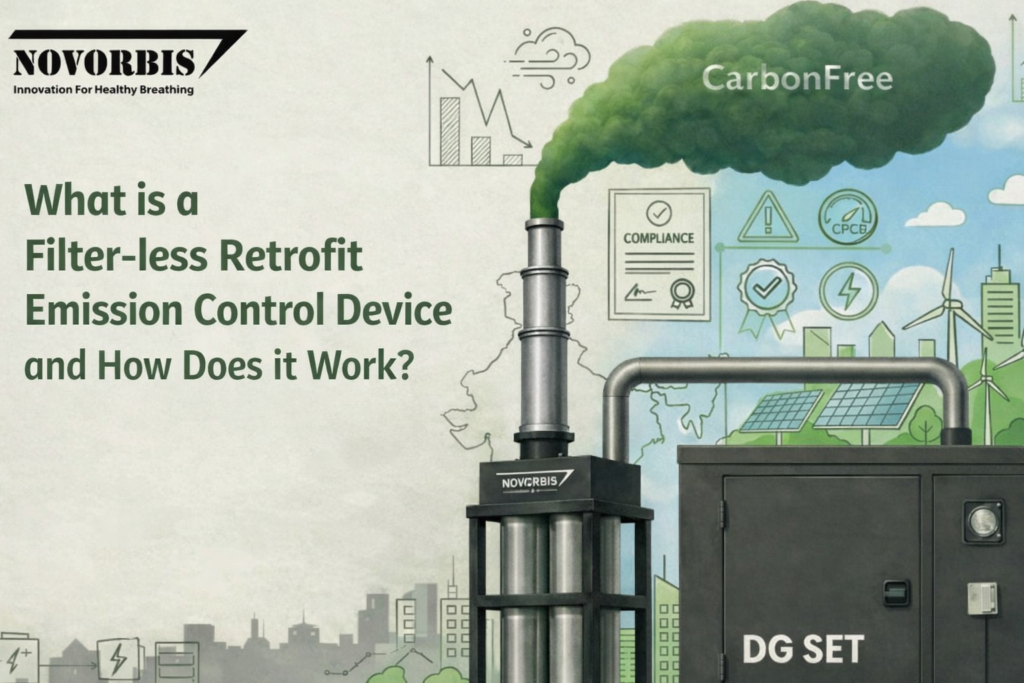
Air pollution caused by diesel engines is one of the biggest environmental challenges today. Industries, commercial buildings, hospitals, and construction sites often rely on diesel generator (DG) sets, which release harmful pollutants into the atmosphere. To reduce these emissions and meet environmental regulations, modern technologies like the Filter-less Retrofit Emission Control Device (RECD) have been developed.
Novorbis Itus is at the forefront of providing innovative emission control technologies designed to reduce diesel engine pollution while maintaining engine efficiency. In this article, we will explore what a Filter-less RECD is, how it works, and why it is becoming a preferred solution for emission control.
Understanding Retrofit Emission Control Devices (RECD)
A Retrofit Emission Control Device (RECD) is an advanced pollution control technology installed in the exhaust system of diesel engines or generator sets. The purpose of this device is to reduce harmful pollutants such as:
- Particulate Matter (PM)
- Carbon Monoxide (CO)
- Hydrocarbons (HC)
- Nitrogen Oxides (NOx)
Unlike traditional filtration systems, a filter-less RECD uses advanced catalytic and chemical processes to reduce emissions without requiring physical filters that can clog or require frequent maintenance.
What is a Filter-less Retrofit Emission Control Device?
A Filter-less Retrofit Emission Control Device is a specialized emission reduction system designed to control diesel exhaust pollutants without using a particulate filter.
Traditional emission control systems rely on filters that capture soot particles, which require periodic cleaning or replacement. In contrast, filter-less technology uses oxidation catalysts and chemical reactions to convert harmful pollutants into less harmful substances before they are released into the atmosphere.
The solutions developed by Novorbis Itus are designed to deliver high emission reduction efficiency while minimizing maintenance and operational disruptions.
How Does a Filter-less RECD Work?
A Filter-less Retrofit Emission Control Device works through a series of catalytic and chemical reactions that occur inside the device as exhaust gases pass through it.
1. Exhaust Gas Entry
When the diesel engine operates, exhaust gases containing pollutants are released through the exhaust pipe. These gases enter the RECD unit installed in the exhaust system.
2. Catalytic Oxidation Process
Inside the device, specially designed catalytic materials initiate chemical reactions that convert harmful gases into safer compounds. For example:
- Carbon monoxide converts into carbon dioxide
- Hydrocarbons oxidize into water and carbon dioxide
- Particulate matter is significantly reduced
3. Pollutant Conversion
The catalytic structure accelerates oxidation reactions without blocking airflow, which means the exhaust gases pass smoothly through the device.
4. Cleaner Exhaust Release
After the chemical reactions take place, the treated exhaust gases exit the system with significantly reduced pollution levels.
Key Features of Filter-less RECD Technology
No Filter Blockage
Since there are no physical filters, the system avoids clogging issues commonly found in traditional filtration devices.
Low Maintenance
Filter cleaning or replacement is not required, making it a cost-effective solution for long-term operations.
Easy Installation
These systems can be retrofitted to existing diesel generators, eliminating the need to replace the entire engine system.
Regulatory Compliance
Filter-less RECD systems help organizations comply with environmental regulations such as CPCB emission standards in India.
Improved Operational Efficiency
The device allows smooth exhaust flow without increasing back pressure on the engine.
Applications of Filter-less Retrofit Emission Control Devices
Filter-less RECD systems are widely used across multiple industries that rely on diesel engines.
Common applications include:
- Diesel Generator Sets (DG Sets)
- Construction Equipment
- Industrial Plants
- Hospitals
- Commercial Buildings
- Data Centers
- Mining Equipment
Companies like Novorbis Itus design emission control systems tailored to meet the operational needs of different industries.
Why Businesses Are Adopting Filter-less Emission Technology
Many industries are shifting toward filter-less emission control technology because it offers both environmental and operational advantages.
Reduced Environmental Impact
Significant reduction in particulate matter and harmful gases.
Cost Savings
Lower maintenance and operational costs compared to traditional filtration systems.
Sustainable Operations
Helps businesses reduce their carbon footprint and contribute to cleaner air.
Regulatory Compliance
Ensures compliance with government pollution control norms.
Why Choose Novorbis Itus for Emission Control Solutions?
Novorbis Itus specializes in advanced emission control technologies designed to meet modern environmental challenges. Their innovative solutions focus on reducing diesel emissions while maintaining reliability and efficiency.
Key benefits of working with Novorbis Itus include:
- Advanced filter-less emission control technology
- Compliance with environmental standards
- Custom solutions for various industries
- Reliable performance and low maintenance
By integrating cutting-edge engineering with sustainability goals, Novorbis Itus is helping industries transition toward cleaner and more responsible operations.
Conclusion
A Filter-less Retrofit Emission Control Device is a modern and efficient solution for reducing diesel engine emissions without relying on traditional filtration systems. By using catalytic reactions instead of filters, this technology minimizes maintenance while delivering effective pollution control.
As environmental regulations continue to tighten, industries are increasingly adopting advanced emission control solutions. Companies like Novorbis Itus are playing a key role in delivering innovative technologies that help businesses operate sustainably while protecting air quality.