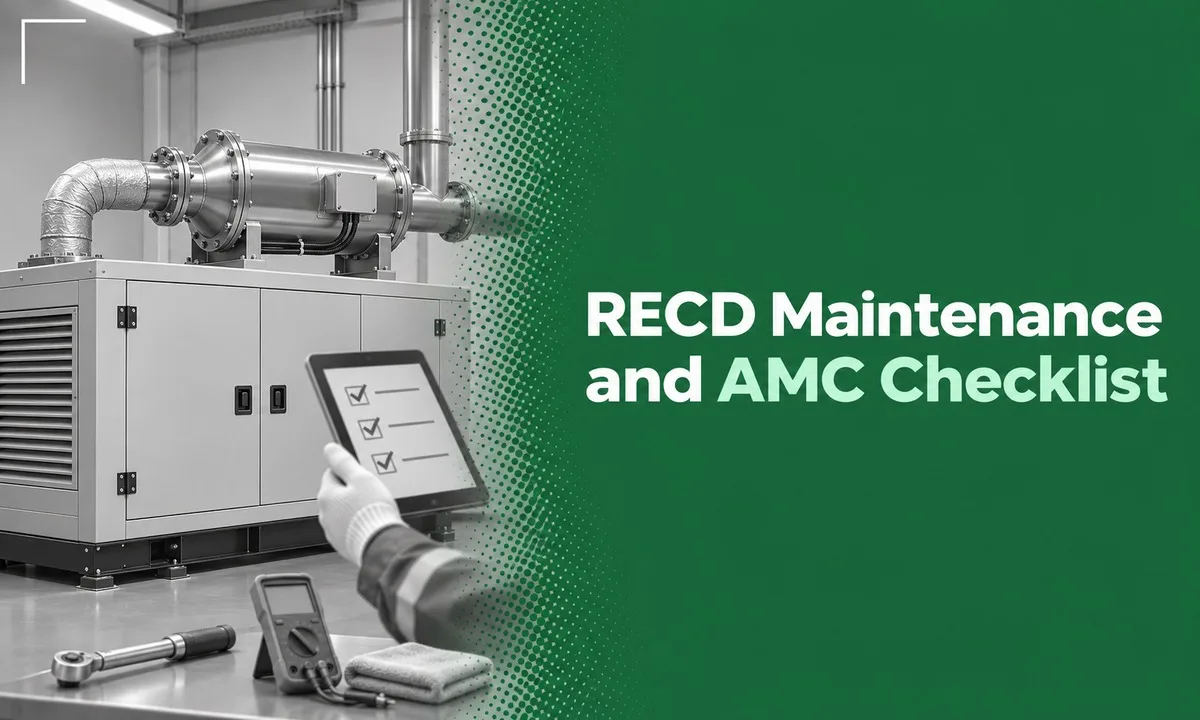
A RECD maintenance checklist matters because a retrofit emission control device is not a fit-and-forget part. It sits in a hot, dirty exhaust stream, it is certified to deliver a specific level of particulate reduction, and an inspector can ask to see proof that it is still doing so long after the invoice was paid. A device that has clogged, drifted out of specification or simply never been cleaned may still be bolted to the exhaust, but it is no longer giving you the compliance you paid for, and it may be quietly costing you fuel and engine life. This guide sets out a practical maintenance rhythm, the warning signs to act on and what a good annual maintenance contract (AMC) should cover.
Why maintenance decides compliance
Three things depend on how well the device is kept. The first is emission performance: a fouled or damaged element captures less. The second is back-pressure: as deposits build, resistance in the exhaust line rises, which can strain the engine and raise fuel use, a point that also affects any OEM warranty discussion. The third is evidence. Boards and auditors increasingly ask for service records alongside the installation certificate, and a clean maintenance log is often the difference between a short inspection and a long one. One Indian RECD maker describes its service contract as periodic inspections, cleaning, part replacement and performance monitoring, so that the device stays within the reduction the rules require.
The maintenance rhythm
The exact tasks depend on the technology and the manufacturer's manual, which always overrides general advice. What follows is the shape most schedules take.
Interval | What to do |
|---|---|
Every run | Note visible smoke, unusual sound, alarms or fault lights, any burning smell |
Weekly or after each test run | Walk-round of casing, mounting, insulation and exhaust joints; update the running-hour log |
Monthly | Take a back-pressure reading if there is a test point and compare it with the commissioning baseline; check cables, connectors and indicator lights |
Quarterly | Deeper inspection through access points; review log trends; confirm fuel quality meets the manufacturer's specification |
Annually or per manual | Professional service: cleaning or servicing per design, wear parts replaced, electrical and control tests, performance check, signed report |
Every run, a short note is enough: visible smoke that was not there before, a change in sound, alarms or fault lights on the device's controller where fitted, and any smell of burning. The weekly walk-round and the monthly back-pressure reading are what give you a trend line, and the trend is more useful than any single number. Quarterly checks go deeper, and the annual service should end with findings written up and signed.
What changes by technology
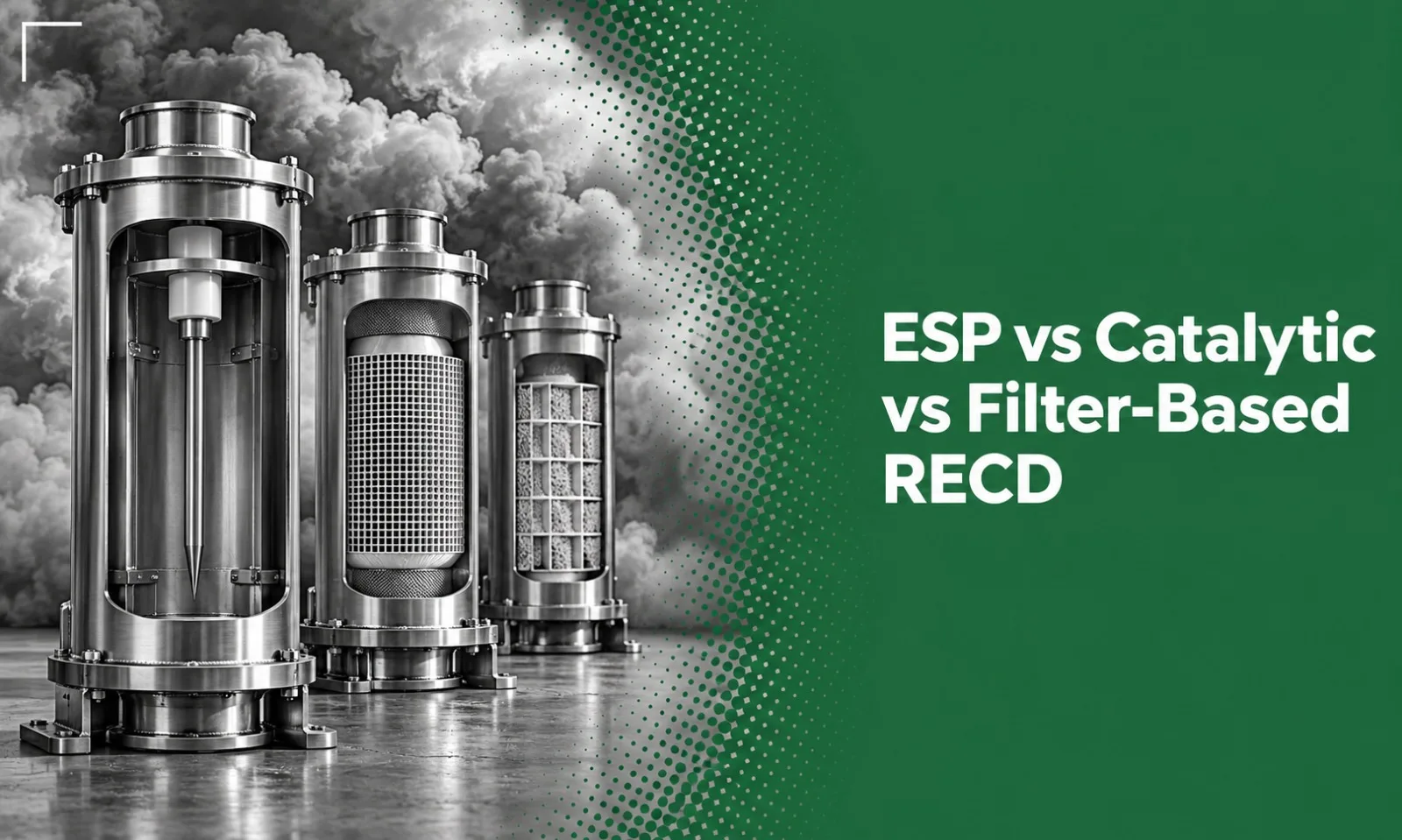
Electrostatic precipitators have collecting surfaces and insulators that need periodic cleaning, and a power supply and control unit that need checking. Filter-based devices need attention to soot loading and regeneration, and cleaning or replacement of the filter element according to the manufacturer's schedule. Catalytic devices need inspection for fouling and attention to fuel quality, because contaminants can reduce how well the catalyst works. If you have not yet chosen a technology, our comparison of ESP, catalytic and filter-based RECDs explains these differences in more depth.
Warning signs to act on
Rising back-pressure compared with the commissioning baseline, a visible increase in black or grey smoke, noticeably higher fuel consumption for the same load, hard starting or poor engine response, unusual noise from the exhaust, or any fault indication on the device are all reasons to call the service team rather than wait for the next scheduled visit. Do not remove, bypass or modify the device to cure a symptom, because that undoes your compliance and may void the vendor's warranty.
What a good RECD AMC should include
An AMC is only as good as its scope, so read it as carefully as you would a purchase order. Generic DG set tenders draw a line between non-comprehensive contracts, which cover servicing and maintenance, and comprehensive ones that cover all items and components. Ask which type you are being offered for the RECD, and what is excluded.
A strong RECD AMC normally lists the number of preventive visits per year, response time for breakdowns, the scope of each visit and the spares covered. It should name who is responsible for consumables, state whether performance checks and any emission testing are included, promise a written service report after every visit, and set out what happens to the warranty if work is done by someone else. Some OEM offerings go further: Kirloskar, for example, describes feasibility checks, operator training and a one-stop AMC covering both the RECD and the DG set, and some vendors add remote monitoring. If you run several sets, ask for one contract and one report format so your compliance file stays consistent.
Common mistakes
The most frequent errors are buying a device with no service plan, relying on the DG set AMC to cover a device the contractor does not understand, ignoring back-pressure readings, and keeping no records. A close fifth is letting the AMC lapse and discovering at the next inspection that no one has serviced the device for a year.
Records to keep
Keep the baseline back-pressure reading, every service report, parts replaced, running hours and any fault events in the same folder as the certificate and installation record. Our RECD inspection checklist for SPCB audits explains how that file should look on audit day.
Want a maintenance plan written for your set? Novorbis Itus is on the CPCB RECD vendor list (as of 30-06-2026). Share your DG set details and we will suggest a service schedule that matches your device and duty cycle.
Talk to Novorbis about RECD for your DG set.